- 01 Jan 2026 06:02 PM
- New
Exit old cess, enter new cess: Regime change for tobacco taxation from 1 February
New Delhi: The Centre on Wednesday issued an order giving effect to a new law levying a health and national security cess on tobacco and its products in place of the goods and services tax (GST) compensation cess, effective from 1 February. Separately, it also withdrew the compensation cess on tobacco products from the same date.
Read More
- 01 Jan 2026 06:18 PM
- New
India's GST collections rise 6.1% to ₹1.74 trillion in December 2025 — Details here
India's gross goods and services tax (GST) collections surged 6.1% to hit ₹1.74 trillion in December 2025, compared on a year-on-year (YoY) basis amid the tax cuts implemented by the central government, according to the official data released on Thursday, 1 Janaury 2026.
Read More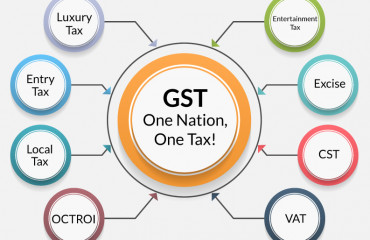
- 01 Jan 2026 05:50 PM
- New
India's fiscal deficit hits ₹9.76 trillion, nearly two-thirds of target
India's fiscal deficit from April to November 2025 stood at ₹9.76 trillion or 62.3% of the budget estimate for 2025-26, showed data from the Controller General of Accounts (CGA). Total receipts stood at ₹19.49 trillion, including revenue receipts of ₹19.10 trillion, while the government has spent ₹29.25 trillion.
Read More
- 31 Dec 2025 06:06 PM
Two-wheeler and passenger vehicle sales smash all-time records in a year of many firsts for automakers
According to Vahan data, two-wheeler registrations grew 7% to a record 20.2 million units in 2025, while passenger vehicle registrations grew 9% to 4.38 million units, also a record.
New Delhi: India’s top manufacturers of scooters, motorcycles and cars are set to close the year on a record high, with two-wheeler retail registrations crossing 20 million and four-wheeler registrations crossing 4.3 million for the first time.

- 31 Dec 2025 05:48 PM
Stocks to watch: RITES, Bharat Forge, IndiGo, Lupin, among 8 shares in focus today; Check list here
Indian stock market benchmark indices — Sensex and Nifty 50 — were expected to open flat on Wednesday, December 31, the final trading session of 2025, amid thin volumes. Most Asian markets, including Japan, South Korea and Thailand, were closed for New Year’s Eve.
Read More
- 31 Dec 2025 05:39 PM
India pips Japan to become world's fourth largest economy, says govt
The country is set to enter the new year on a strong economic footing with favourable farm prospects, the effects of GST rationalization, benign inflation, and strong corporate balance sheets, the government said in a year-end update on the economy.
Read More
- 31 Dec 2025 06:20 PM
Annual GST Returns Deadline Sought to Be Extended Due to Complex ITC Reporting
The representation seeks an extension of the due date for filing Forms GSTR-9 and GSTR-9C for FY 2024-25, citing substantial practical challenges. Recent amendments have significantly increased the granularity and complexity of ITC reporting, requiring detailed bifurcation, multi-table disclosures, and intricate reconciliations spanning three financial years due to spill-over credits and reversals.
Read More
- 31 Dec 2025 06:14 PM
India’s FMCG sector is entering 2026 betting on volumes, not prices
Easing inflation, GST tweaks and stable commodity costs are lifting sentiment, but questions remain over the durability of demand and margin protection.
Dear reader, as 2025, a year of global tumult and volatility, rolls by, Mint's reporters and columnists look around the corner on what is coming in 2026—to help you know what to expect and prepare for it. Tell us what you think at feedback@livemint.com.
- 30 Dec 2025 06:35 PM
Regulator PNGRB for regulating regasification fee, bringing natural gas under GST
The proposal comes days after the regulator lowered the tariff slabs for gas transportation, thereby making compressed natural gas and city gas distribution prices cheaper.
New Delhi: In a bid to make natural gas cheaper and boost adoption, India’s gas regulator has proposed regulating the regasification charges for liquefied natural gas (LNG) and also bringing the fuel under the goods and services tax (GST), citing low utilization and weak financial viability at most terminals.

- 30 Dec 2025 06:40 PM
How India’s health insurance choices evolved in 2025
The removal of GST on health and term insurance was an important catalyst in how consumers upgrade coverage, choose smarter products, and commit to longer-term protection.
As 2025 comes to a close, India’s health insurance market looks very different from what it was even a year ago. The year marked a decisive shift in how Indian households evaluate healthcare risk, driven by rising medical costs, deeper product innovation, and a regulatory environment that encouraged consumers to seek better protection.
The removal of GST on health and term insurance was an important catalyst in how consumers upgrade coverage, choose smarter products, and commit to longer-term protection.
As 2025 comes to a close, India’s health insurance market looks very different from what it was even a year ago. The year marked a decisive shift in how Indian households evaluate healthcare risk, driven by rising medical costs, deeper product innovation, and a regulatory environment that encouraged consumers to seek better protection.